落花铺路风满树
流水不住问归处
半壁残阳羞入眼
沿廊踱步循李杜
首句妙语天成,次句合之;三句望西而作,尾句寻寻觅觅,反反复复,沿廊而走,当真妄学李杜。
初冬黄昏,于元大都公园。
The common misconception these days is that services like YouTube are Web 2.0. This is only partially correct. Uploading your work to a site, rating it, sharing it - these are not new concepts. Sites/Services like DeviantArt have been doing it since Web 1.0.
People are talking about the word 'Community' like it represents the spirit of Web 2.0. Community was one of the buzzwords of the Web 1.0 bubble. It is not new.
The new part is that YouTube lets you embed your video on other sites and access their content via RSS. These are both forms of syndication.
So if syndication is the main new feature (and not community or user-generated content) then the main new tool must be aggregation.
But aggregation is a means to an end. When a user is able to access content on their own terms another much more fundamental trend reveals itself. Personalization.
Every feature typically associated with Web 2.0 (blogs, syndication, rating, digging, ajax) is actually about allowing greater Personalization by putting the user at the centre of their experience.
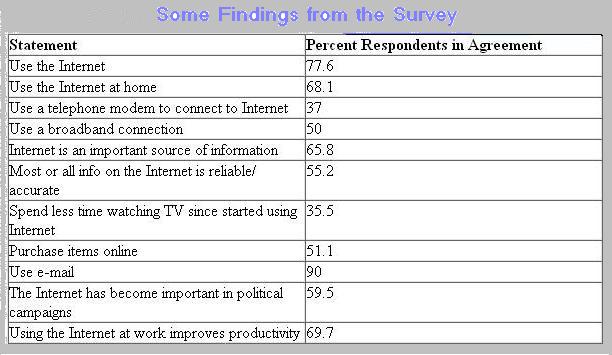
The report also found that as Internet users increasingly use the web to socialize, they also translate those online social connections to real-life activities. 20.3 percent of those who participate in online communities also participate in offline activities related to the online community at least once a year. Members of The Lounge can certainly attest that, in any given week of the year, it's almost guaranteed that there is an "Arsmeet" happening somewhere around the world. Similarly, 40 percent of the respondents reported being more involved in social activism since they began to participate in online communities, with two thirds of those involved with social causes saying that they are now involved in activities because of the Internet.
1,In the sixth Surveying the Digital Future study, University of Southern California’s Annenberg School Center for the Digital Future found Internet usage in the U.S. continues to rise.
A more significant finding of the survey is that, in its own way, the virtual reality of the Internet has become as “real” as the “real world.”
“Large numbers of Internet users hold such strong views about their online communities that they compare the value of their online world to their real-world communities,” USC Annenberg School said in a summary of its survey, released Wednesday.
2,In a related study, research firm Medefield found that the Internet has become numero uno when it comes to methods used for gathering data in pharmaceutical industry market research studies.
Specifically, Internet-based market research “has leapt ahead of face-to-face and phone interviews to become the world's number one method of data collection for quantitative physician studies,” Associated Press said in a report Wednesday.
Acceptance of the Internet as a way to gather research data has been especially rapid in the European Union, AP said.
The USC and Medefield studies, while discussing different aspects of the Internet’s impact on society, nonetheless speak of a broader trend: the online world is more “real” than ever, whether viewed as a way to make and keep friends or gather data for professional research.
"Mobile communications is once again changing even faster than many of us have predicted, and we are still far away from this being a mature market.The Internet has transformed the way we live our lives and communicate with each other, and we expect it to play a key role in the next phase of Nokia’s growth. The next wave of the Internet will be to make it truly mobile, creating new ways for people to connect to others and find information from wherever they are. Nokia intends to be at the forefront of this new era and be the company that truly merges the Internet and mobility."
It seems to me that at least part of the reason for the level of activity in Europe is the difference in financial model for Web 2.0. The dot-com boom was all about investing a lot of money, developing fast and then going for IPO. Burn rates for dot-coms were legendary and the capital was available on the basis that the investors would reap huge rewards on flotation. This, of course, meant that access to the much more flexible and willing US stock markets was very important.
Web 2.0 seems to be going about things differently. Companies are starting up on shoestring budgets and the exit strategy seems to be to be bought by Google, or some other cash-rich survivor of the last boom. The hardware and software necessary to get an idea off the ground is now trivially cheap in comparison to six years ago so the major cost is people. That means that two or three people who are willing to invest their own time in developing an idea can come up with something innovative and viable in a few months so access to a lot of liquid capital is not as necessary.
“在如火如荼的全民娱乐时代,我们2007年的主题词将会是:电视娱乐、互联网娱乐和移动娱乐。硅谷已经被好莱坞人士所占领,ICT产业的驱动力是娱乐化。那么娱乐化之后的发展方向是什么呢?我认为是“广告化”。微软的发展方向是把Windows和Office免费提供而通过广告来收费(类似最近大受诟病的流氓软件),谷歌的发展方向是在每个视频片断中植入AdSense。因此媒体、娱乐、广告三者的融合,是网络融合中新泛起的浪花。
为什么广告变得这么核心?原因在于我们所处社会在日益碎片化。我曾经住在旧金山的同学家里,他是个美国人在欧洲和我一起读的MBA,但是他竟然没有听说过《富爸爸穷爸爸》这本书,让我大吃一惊。后来接触美国社会时间长了,我也就见怪不怪了,美国没有像中国央视新闻联播这样的所有人都会看的节目,每个人为了竞争只能专业化道路上越扎越深,导致了碎片化,而广告将成为融合各种碎片价值的弥补手段。
所以在2007年,融合和碎片、极大和极小,这样的两极分化会更加明显。”


 博文
博文


